When to Treat Creeping Charlie in Bloomington MN Lawns
The best time to treat Creeping Charlie in Bloomington, MN is during two specific windows: mid-spring when the plant is actively flowering (typically late April through mid-May), and again in early fall between late September and mid-October. Both windows catch ground ivy when it moves nutrients through its vascular system most aggressively, making broadleaf herbicides far more effective. Soil temperatures should be above 50°F for absorption to work properly. Missing these windows and treating in summer heat or dormant winter conditions produces poor results and wastes product.
Why Does Timing Matter So Much for Creeping Charlie Control?
Creeping Charlie, also known as ground ivy, is a perennial broadleaf weed that spreads aggressively across Bloomington lawns, especially in shaded or moist areas near the Minnesota River valley corridor. Its dense mat of stems roots at every node, meaning a single missed treatment can allow re-establishment within weeks. Herbicides containing triclopyr or dicamba work by disrupting the plant's growth hormones, but only when the plant is actively translocating nutrients. Treat it during dormancy or peak summer stress and the chemistry simply does not move deep enough into the root system to cause a clean kill. Timing your application to the plant's own biology is the single biggest factor separating a successful treatment from a repeat problem.
What Are the Spring Treatment Cues to Watch For?
Spring is the more critical of the two treatment windows for most Bloomington homeowners. Watch for these specific indicators rather than relying solely on the calendar:
Bloom timing: Creeping Charlie produces small purple flowers in clusters. Apply your broadleaf herbicide when approximately 50 percent of plants are in full bloom. This signals peak nutrient translocation.
Soil temperature: Confirm soil temperatures have reached and held above 50°F for at least three consecutive days. In Bloomington, this typically falls between late April and early May depending on the year.
Forecast window: Choose a stretch of at least 48 hours with no rain in the forecast and temperatures between 60°F and 85°F. Rain washes product off leaves before absorption completes.
Turf status: Your grass should be actively growing, not just emerging. Treating dormant or stressed turf alongside Creeping Charlie risks collateral damage to desirable grass species.
If you are managing a lawn along the wetter lowlands near Bush Lake or the Nine Mile Creek corridor, expect Creeping Charlie establishment to be heavier and bloom timing to lag by a few days compared to drier elevated lots in neighborhoods like Normandale.
Is Fall Treatment as Effective as Spring?
For many Bloomington lawns, fall is actually the preferred treatment window among lawn care professionals. As temperatures cool in late September and October, Creeping Charlie begins pulling carbohydrates downward into its root system to prepare for winter. A broadleaf herbicide applied during this period travels directly into the roots, delivering a more complete kill than spring applications that may only damage above-ground tissue.
Target the window between late September and the first hard frost, which in Bloomington typically arrives in mid to late October. Soil temperatures should still read above 50°F, and you need the same rain-free forecast window as in spring. Avoid treating after the first frost because the plant has already shut down translocation.
For properties with heavy infestations, a two-application strategy works best: one spring treatment timed to bloom, followed by a fall treatment to catch any regrowth. This is detailed further in the fertilizer and weed control master plan for Bloomington homeowners looking to coordinate their full season program.
Which Products Work Best for Ground Ivy in Minnesota?
Broadleaf herbicides labeled for ground ivy control typically contain one or more of the following active ingredients: triclopyr, dicamba, or clopyralid. Three-way blends that combine 2,4-D, dicamba, and triclopyr are widely available and perform reliably on Creeping Charlie when application timing is correct. Products containing triclopyr alone tend to produce stronger results on dense infestations.
Liquid formulations outperform granular products on Creeping Charlie because the waxy leaf surface requires direct spray contact and proper surfactant penetration.
Adding a surfactant (a drop of non-ionic dish soap or a dedicated herbicide surfactant) to your spray tank significantly improves absorption through the waxy cuticle.
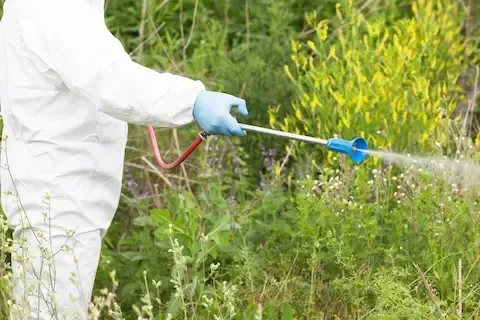
Spot treatment vs. broadcast: For isolated patches, spot spray with a hand pump sprayer. For widespread infestations covering large turf areas, a backpack or wheeled sprayer gives more consistent coverage.
Always read label directions completely before mixing. Minnesota has specific application restrictions near water bodies, which is relevant for any property backing up to the Minnesota River, Hyland Lake, or any of Bloomington's numerous retention ponds.
What Mistakes Should You Avoid When Treating Creeping Charlie?
Even well-timed applications fail when basic application errors occur. The most common mistakes on Bloomington lawns include:
Treating during a heat advisory when temperatures exceed 85°F, which volatilizes product and increases drift risk to nearby ornamentals.
Mowing within 48 hours before application, which reduces the leaf surface area available for absorption.
Watering within 24 hours after treatment, washing active ingredients off before they translocate.
Expecting a single application to eradicate a multi-season infestation. Dense root networks often require two or three properly timed treatments across consecutive seasons.
Neglecting the underlying conditions that allowed Creeping Charlie to establish, particularly shade and compacted soil. Without addressing drainage and turf density, reinfestation is nearly certain.
If you want professional-grade results without managing the application yourself, weed control services calibrated to Bloomington's specific soil and climate conditions are available through local specialists who track seasonal timing cues each year.
Does Lawn Health Affect How Well Treatment Works?
Yes, significantly. Creeping Charlie fills voids left by thin, stressed turf. A lawn with strong Kentucky bluegrass or tall fescue density naturally resists re-invasion after treatment. After your herbicide application, overseed bare or thin areas in early fall and apply a slow-release nitrogen fertilizer to support turf recovery. Aerating compacted areas, particularly under tree canopies common in Bloomington's older residential neighborhoods, reduces the moist shaded conditions Creeping Charlie thrives in. Treatment and turf improvement must work together for results that last more than a single season.

