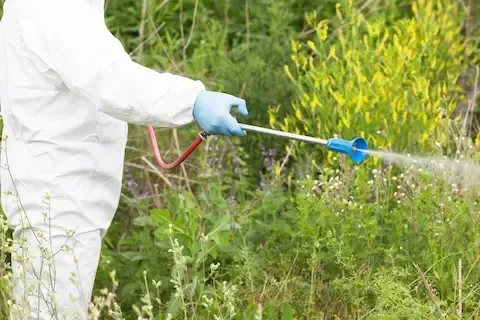
Bloomington MN Fertilizer and Weed Control Master Plan
A healthy Bloomington lawn does not happen by accident. It takes a deliberate feeding and weed suppression calendar tuned to Zone 4b's compressed growing season, the specific soil conditions found across the city's neighborhoods, and the timing windows that separate effective applications from wasted product. Whether you are managing a thick stand of Kentucky bluegrass near Nine Mile Creek or dealing with a thin, compacted turf in an older Bloomington neighborhood, the same principle applies: the right nutrient at the right time combined with the right weed control strategy is what builds a dense, competitive lawn that crowds out weeds on its own.
Understanding Zone 4b and What It Means for Lawn Feeding
Bloomington sits firmly in USDA Hardiness Zone 4b, which means average annual minimum temperatures drop between negative 25 and negative 20 degrees Fahrenheit. That cold baseline shapes everything about how cool-season grasses like Kentucky bluegrass, fine fescue, and perennial ryegrass behave throughout the year. Soil temperatures drive both root development and weed seed germination, and in Bloomington those soil temperatures often lag well behind air temperatures in spring and lead them on the way down in fall.
The practical implication is that your lawn care calendar cannot be driven by calendar dates alone. A warm March can fool you into early applications that wash away before turf actually takes them up. A cool May can delay crabgrass germination past the point where your pre-emergent window has closed. Learning to watch soil temperature rather than the calendar is one of the most important habits a Bloomington homeowner can develop.
The Five Application Windows That Define a Minnesota Lawn Season
A complete Zone 4b fertilizer and weed control plan typically involves five application windows spread from late April through November. Each one serves a distinct biological function.
Window 1 — Early Spring Pre-Emergent (Late April to Early May): Soil temperatures approaching 50 degrees Fahrenheit signal the right moment for pre-emergent herbicide application. In Bloomington, this typically falls between the last week of April and the first week of May, though it shifts by a week or two depending on how the winter ends. The goal is to create a chemical barrier in the soil before crabgrass and other annual grassy weeds germinate. Fertilizer applied at this stage should be modest in nitrogen to avoid pushing excessive top growth before root systems have fully recovered from winter. A slow-release formulation or a starter fertilizer type product keeps the lawn fed without the flush of growth that invites disease.
Window 2 — Late Spring Broadleaf Control (Mid May to Early June): Once turf is actively growing and temperatures are consistently above 60 degrees, broadleaf weeds like dandelion, creeping Charlie, clover, and plantain respond well to post-emergent herbicide applications. This is also the window where a second round of balanced fertilizer makes sense, providing nitrogen to support leaf density heading into summer. Avoid applying broadleaf herbicides during drought stress or on days when temperatures exceed 85 degrees, as turf injury risk increases significantly.
Window 3 — Early Summer Maintenance (Late June to Mid July): Summer in Bloomington can bring stretches of heat that push cool-season grasses into partial dormancy. If that happens, skip fertilizer applications entirely rather than trying to force growth. If soil moisture is adequate and turf remains actively growing, a light application of slow-release nitrogen can sustain density without creating a disease-prone flush. Spot-treat any weed escapes from earlier applications rather than applying blanket herbicide during heat stress.
Window 4 — Late Summer Recovery and Renovation (Mid August to Mid September): This is one of the most important windows in the entire season for Bloomington lawns. As soil temperatures drop back below 75 degrees and overnight lows cool, cool-season grasses shift into their second major growth phase of the year. This is the ideal time for overseeding thin areas, aerating compacted soils, and applying a balanced fertilizer that supports both root development and new seed establishment. Weed pressure typically decreases in late summer, but any perennial weeds still present should be treated before they store energy for next year.
Window 5 — Fall Winterizer Application (Mid October to Early November): The fall winterizer application is arguably the single most impactful fertilizer application of the entire year. Applied after the lawn has stopped growing but before the ground freezes, a high-potassium winterizer formula supports root carbohydrate storage, improves cold hardiness, and positions the lawn to green up faster and more uniformly when Bloomington's spring arrives. Many homeowners skip this application because the lawn looks dormant and the season feels over, but skipping it means starting next April a step behind.
Reading Your Bloomington Soil Before You Feed It
Soil across Bloomington is not uniform. Neighborhoods near the Minnesota River corridor often have heavier clay content that holds moisture but drains slowly and can become anaerobic in wet springs. Areas developed in the 1950s and 1960s frequently have compacted subsoil from construction activity, thin topsoil depth, and pH levels that drift acidic over time. Both conditions affect nutrient availability regardless of how much fertilizer you apply.
A basic soil test from the University of Minnesota Extension costs very little and gives you data on pH, phosphorus, potassium, and organic matter. If your Bloomington lawn's pH has drifted below 6.0, lime applications to raise it will unlock nutrients already present in your soil and make your fertilizer investment far more effective. If phosphorus is already high, which is common in older Bloomington neighborhoods where lawns have been fertilized for decades, you can select phosphorus-free fertilizer products and reduce runoff into local water bodies including Hyland Lake and Bush Lake.
Matching Products to Problems: Weed Species Common in Bloomington
Not all weeds require the same approach, and knowing which weeds you are actually fighting helps you select the right products and timing. Crabgrass is the most common annual grassy weed in Bloomington lawns, and it is controlled almost entirely through pre-emergent timing rather than post-emergent treatment. If crabgrass escapes your pre-emergent window, quinclorac-based products offer post-emergent options, but they work best on young plants and require careful label compliance.
Creeping Charlie, also known as ground ivy, is one of the most persistent broadleaf weeds in Bloomington and across the Twin Cities metro. It spreads by both seed and stem, thrives in shaded moist areas, and resists many standard broadleaf herbicides. Products containing triclopyr show stronger results on creeping Charlie than straight 2,4-D formulations. Fall applications when the plant is drawing energy into roots tend to outperform spring applications.
Wild violet presents similar challenges in shaded areas near trees and fence lines. Dandelion and plantain are easier targets that respond to most broadleaf herbicide products when applied during active growth. Clover is increasingly common in lawns where nitrogen fertility has been low, and the best long-term control is simply raising nitrogen levels so turf outcompetes it.
For comprehensive weed control through the season, product selection should always match the specific weed species present, the stage of growth, and the current stress conditions of your turf.
Common Mistakes That Derail Bloomington Lawn Programs
Several application errors consistently undermine what would otherwise be sound programs. The most common is applying pre-emergent too early. Homeowners eager to get ahead of crabgrass often apply in early April when Bloomington soil temperatures are still in the low 40s, and the product breaks down before crabgrass actually germinates, leaving the lawn unprotected during the actual germination window in May.
The second common mistake is skipping the fall application. As mentioned above, the late-season feeding is the one application that most directly influences how the lawn looks and performs through the following year. Even a modest winterizer application in late October outperforms no application at all.
Third is applying too much nitrogen in May. Early summer nitrogen pushes lush top growth that requires frequent mowing and increases susceptibility to dollar spot, brown patch, and other fungal issues. Splitting your total nitrogen budget across multiple smaller applications produces better results than front-loading the season.
Fourth is treating weeds during drought. When turf is stressed and stomata are partially closed, herbicide uptake is poor and the risk of injury to desirable grass increases. If Bloomington is in a dry stretch in July, hold off on blanket weed treatment until conditions improve or target weeds individually.
Building the Program: A Practical Timeline for Bloomington Homeowners
Pulling all of this together into a working calendar requires adjusting the general windows above to actual conditions each spring. A reliable approach for most Bloomington properties looks like this: Watch local soil temperature data from the Minnesota Department of Agriculture or University of Minnesota Extension starting in mid-April. When soil temperatures at two inches reach 50 degrees on two or more consecutive days, apply pre-emergent. Follow up in mid-May with a broadleaf treatment if weeds are visible and a second fertilizer application if growth is active. Hold through the heat of July unless conditions are favorable. Aerate and overseed thin spots in late August. Apply a full balanced fertilizer in September to support recovery. Close the season with a winterizer in October.
Connecting this schedule to your spring lawn winter recovery work ensures that the late-season feeding from the previous fall and the early-spring recovery steps align rather than overlap or conflict.
Why Consistency Across Multiple Seasons Matters More Than Any Single Application
The lawns that stand out in Bloomington neighborhoods, thick and green through July heat and still dense heading into fall, are rarely the product of one particularly good application. They reflect three or four consecutive seasons of consistent feeding, appropriate weed suppression, and soil health attention. Organic matter builds slowly. Root systems deepen year by year when they receive consistent potassium and appropriate fall feeding. Weed seed banks in the soil decline steadily when you prevent new seeds from being set season after season.
A single great year can repair a lot of damage. But sustainable turf quality in Zone 4b is a cumulative outcome, and every application window you hit correctly compounds into the lawn you are building over time. Start with a soil test, build your calendar around actual soil temperature data, and commit to hitting all five application windows consistently. That discipline, more than any single product or technique, is what separates the best-looking lawns in Bloomington from the rest.

