Choosing Grass Seed for Shaded Bloomington MN Lawns
Shade is one of the most common lawn challenges in Bloomington, MN, and for good reason. The city's mature neighborhoods—from the established tree canopies along East Bloomington streets to the dense wooded lots near the Minnesota Valley National Wildlife Refuge—create growing conditions that most standard Kentucky bluegrass simply cannot handle. If you've tried to fill in a bare, struggling patch under your oak or ash tree and watched it fail season after season, the problem likely starts before you even open the seed bag. Choosing the right grass variety for shaded conditions is the single most important decision in any shade lawn renovation.
Why Kentucky Bluegrass Fails in Heavy Shade
Kentucky bluegrass is the default choice for Minnesota lawns, and it performs beautifully in full-sun situations. It spreads aggressively through rhizomes, recovers from damage, and produces that dense, dark-green turf homeowners love. But Kentucky bluegrass needs a minimum of six hours of direct sunlight daily to thrive. Drop below four hours and the grass becomes thin, weak, and highly vulnerable to disease and foot traffic stress.
Under mature trees in Bloomington neighborhoods, sunlight is often filtered or blocked entirely for large portions of the day. Competing root systems from large elms and maples also pull moisture and nutrients from the soil, adding another layer of stress. Trying to force Kentucky bluegrass into these conditions leads to an endless cycle of seeding, brief establishment, and failure.
Fine Fescue Blends as the Primary Solution
Fine fescue is the go-to category for shade grass seed in Bloomington and across Minnesota. The group includes creeping red fescue, chewings fescue, hard fescue, and sheep fescue—each with slightly different characteristics, but all sharing a tolerance for low light, dry soils, and minimal fertilization.
Creeping red fescue is the most widely used shade-tolerant option in the Upper Midwest. It spreads slowly through short rhizomes, handles dry shade under tree canopies reasonably well, and stays relatively fine-textured. Chewings fescue is a bunch-type grass that performs well in shadier spots and tolerates acidic soils, which are common under conifers. Hard fescue is especially drought-tolerant once established and blends well with other fine fescues.
For most shaded Bloomington lawns, a blended fine fescue mix—one that combines two or three of these species—outperforms any single variety. The blend creates built-in adaptability across varying light levels throughout the yard. Look for seed mixes with a minimum germination rate of 85 percent and low weed seed content. Cheaper bags often inflate the mix with annual ryegrass as filler, which germinates quickly but won't persist through a Minnesota winter.
Where Perennial Ryegrass Fits In
Perennial ryegrass is not a shade specialist, but it earns a place in some shade mixes when quick coverage is the priority. It germinates in seven to ten days under good conditions, which makes it useful for holding soil and suppressing weeds while slower fine fescues establish. It also handles moderate shade—roughly three to four hours of sun—better than Kentucky bluegrass does.
If you're overseeding a transitional area that gets partial afternoon sun, a mix of sixty to seventy percent fine fescue with the remainder in perennial ryegrass can work well. Avoid mixes that flip that ratio. Too much ryegrass in a true shade area will give you fast germination followed by a slow decline as the ryegrass thins out each summer. Your core aeration and overseeding roadmap explains how proper seedbed prep improves germination rates regardless of which species you choose.
Assessing Your Shade Level Before You Buy Seed
Not all shade is equal, and matching the seed to the actual shade level in your yard makes a measurable difference in outcomes. Walk your lawn at different times of day and observe where sunlight reaches and for how long.
Light shade (four to six hours of sun): Fine fescue blends perform well here, and a small percentage of Kentucky bluegrass in a mix can survive.
Moderate shade (two to four hours of sun): Fine fescue only. Remove any Kentucky bluegrass-heavy mixes from consideration.
Dense or full shade (less than two hours of sun): No turfgrass performs reliably. Consider groundcover alternatives such as pachysandra, wild ginger, or native shade plants suited to Minnesota's climate.
Many Bloomington properties with mature silver maples or large bur oaks fall into the moderate-to-dense range, especially on the north-facing sides of the yard. Being realistic about this before purchasing seed saves you both money and frustration.
Soil Preparation and Seeding Timing in Bloomington
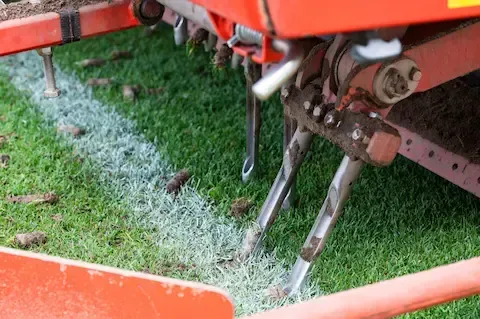
Even the best shade grass seed mix won't establish without reasonable seedbed conditions. Shaded soils in Bloomington tend to stay moist longer, which can lead to surface compaction and thatch buildup that blocks seed-to-soil contact. Lawn aeration before overseeding is especially important in shaded areas for exactly this reason—it breaks up compacted soil, reduces competition from existing thatch, and creates the physical pockets that fine fescue seed needs to make consistent contact with the soil.
Timing matters as well. Late summer to early fall—late August through mid-September in the Bloomington area—is the optimal window for seeding fine fescues. Soil temperatures are still warm enough to drive germination, fall moisture is more reliable than summer, and the cooler air temperatures reduce stress on newly germinated seedlings. Spring seeding is possible but requires more attention to watering and produces more competition from annual weeds. Shade lawns also dry differently than open turf, so set your irrigation against the summer watering schedule for Bloomington lawns rather than a fixed timer.
Managing Expectations for Shade Lawns Long-Term
Even with the right fine fescue blend and proper preparation, shaded lawns in Bloomington require adjusted expectations. Fine fescues are slower to spread than Kentucky bluegrass, and shade lawns generally tolerate less foot traffic. They need less fertilizer—excessive nitrogen actually weakens fine fescues—and benefit from raising your mowing height to three and a half to four inches to maximize the leaf surface available for photosynthesis.
Tree canopies also change over time. A yard that was borderline-acceptable for fine fescue five years ago may have crossed into full shade as trees have matured. Revisiting your shade assessment every few seasons helps you stay ahead of that shift and make proactive decisions about groundcover or canopy management before you're dealing with a completely bare area.
Bloomington's older residential areas are filled with beautiful mature trees, and that canopy is worth preserving. Working with the right shade grass seed mix is how you maintain a functional lawn without fighting conditions that turfgrass simply cannot overcome.

