Aerating Around Mature Trees in Bloomington MN Yards
Bloomington's oldest neighborhoods — from Oxboro to the streets surrounding Normandale Lake — are defined by their canopy. Towering silver maples, bur oaks, and cottonwoods that have been growing for fifty or sixty years create the shaded, private feel that makes these blocks desirable. They also create a lawn care puzzle. The same root systems that anchor those trees spread far beyond the drip line, traveling horizontally through the top six to eighteen inches of soil in every direction. When you schedule lawn aeration without accounting for that underground architecture, you risk damaging the very trees that make your property valuable.
Why Mature Tree Roots and Aeration Interact Differently Than You Expect
Most homeowners picture tree roots growing straight down, deep into the earth. In Minnesota's clay-heavy and compacted urban soils, the reality is the opposite. Mature trees push their feeder roots outward and upward, seeking oxygen and moisture close to the surface. Those feeder roots — pencil-thin to finger-thick strands that handle most of the tree's water and nutrient uptake — can run from the trunk out to one and a half times the height of the tree. For a sixty-foot silver maple, that means roots extending ninety feet in every direction.
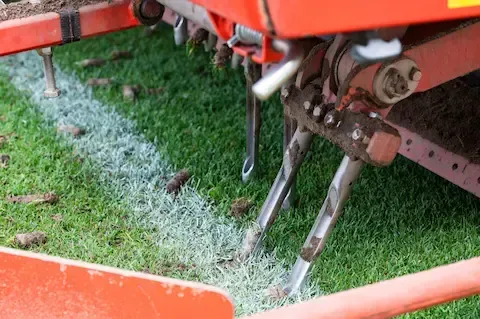
Standard aeration equipment pulls plugs roughly three inches deep. Under ideal turf, that depth causes no harm. Under a mature tree's canopy, those same three-inch holes can sever dozens of feeder roots in a single pass. A few severed roots won't kill a healthy tree. Repeated aggressive aeration across the critical root zone every year, however, adds cumulative stress that shows up as canopy dieback, reduced vigor, and increased vulnerability to pests and disease — problems that aren't cheap to fix.
Mapping the Critical Root Zone Before You Start
Before scheduling aeration in a yard with mature trees, walk the property and sketch a rough surface-root map. Look for raised ridges in the soil, exposed roots at the surface, and areas where turf grows thin or patchy even with adequate water. All of these are indicators of shallow root concentration. The critical root zone is commonly estimated as one foot of radius for every inch of trunk diameter. A twenty-inch diameter oak has a critical root zone extending roughly twenty feet from the trunk in all directions.
Mark these zones with flags or chalk before the aeration crew arrives. Within the critical root zone, you have two practical options: aerate at reduced depth or skip aeration entirely for that area. Many Lawn aeration professionals working in older Bloomington neighborhoods will adjust plug depth settings or hand-flag exclusion areas when they know the layout in advance. The conversation happens before equipment rolls, not after.
Plug Depth Limits Near Roots
Inside the critical root zone, consider limiting plug depth to one and a half to two inches rather than the standard three. This reduced depth still relieves surface compaction and improves water infiltration without routinely cutting through the feeder root layer. It's a practical compromise that protects the tree while still benefiting the lawn growing above.
Outside the critical root zone but still under the canopy, standard depth aeration is generally safe. The outermost root tips are less concentrated and the soil in those transition zones typically has fewer large roots per square foot. The middle zone — between roughly half the critical root zone radius and the full radius — is where judgment matters most. If surface roots are visible in that zone, treat it like the inner zone. If the soil surface is smooth and the turf healthy, standard passes are likely fine.
Shade Lawn Rules Under the Canopy
Turf growing under mature trees in Bloomington faces stresses beyond root competition. Dense shade reduces photosynthesis, forcing grass to put more energy into reaching light and less into root development. That creates a thinner, shallower root system in the turf itself — one that is more sensitive to aeration disturbance than turf in full sun. For shade grass, less aggressive aeration done correctly produces better results than frequent heavy passes.
Fine fescues are the most shade-tolerant turf options for Bloomington's conditions, and they also happen to require less aggressive aeration than bluegrass or ryegrass blends. If you're overseeding under a canopy after aeration, choose a shade-specific blend rather than a general sun-and-shade mix. The difference in establishment success is significant. You can review the full approach to timing and seed selection in this core aeration and overseeding roadmap if you're planning both services in the same season.
Timing Considerations for Tree Health
Early fall is the preferred aeration window in Bloomington for most lawns, and that timing aligns well with tree health too. Roots are less actively growing in late August through September than in spring, which means the stress of incidental root cuts is easier for a tree to tolerate and recover from. Spring aeration around mature trees is riskier because you're disturbing roots during peak growth and nutrient uptake when the tree needs every feeder root functioning.
If your yard has both open sun areas and heavily shaded tree zones, consider a split approach: aerate the open turf on the standard fall schedule and use lighter, less frequent treatment in the root zones. Mature bur oaks in particular — common in Bloomington's older sections near Bush Lake and the Minnesota River bluffs — benefit from minimal soil disturbance around their root zones at any time of year.
What Bloomington Soil Conditions Add to the Challenge
Much of western and southern Bloomington sits on moderately heavy clay soils that compact under foot traffic and freeze-thaw cycles. Compaction in these soils is real and aeration does help. But clay soils also retain moisture longer, which means aeration plugs take more time to break down and reintegrate. Under tree canopies, where moisture levels stay elevated, plugs may stay intact for several weeks. That extended breakdown period is not a problem — it actually means the aeration channels stay open longer, improving oxygen penetration to both turf and tree roots simultaneously.
Older Bloomington properties sometimes have fill soil layered over native clay from mid-century construction. Where fill meets native soil, drainage slows and root concentration can be unexpectedly high even away from the tree trunk. If you've noticed standing water or persistent wet patches under your canopy, have the soil profile evaluated before aeration to understand what you're working with at depth.
Working With the Tree, Not Around It
The homeowners who maintain both great turf and healthy mature trees in Bloomington are the ones who stop treating aeration as a blanket service applied uniformly across every square foot. They read the yard, flag the root zones, communicate with their service provider, and adjust accordingly. The trees that shade your yard in July and add real dollars to your property value are worth the fifteen minutes of planning it takes to protect them during aeration season.

