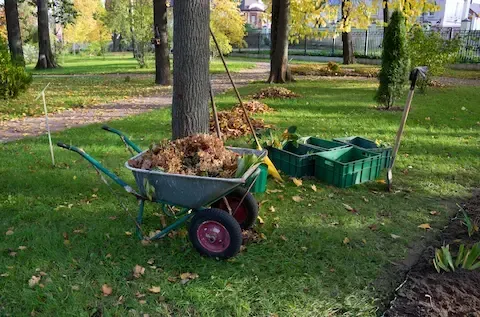
October Leaf Cleanup and Mulching in Bloomington MN
October in Bloomington, MN brings some of the most dramatic leaf drop of the year, and if you let it get ahead of you, a thick mat of wet leaves can smother your lawn before the first snow even arrives. The window between early October and the first hard frost is short but workable, and how you use it determines whether your turf goes into winter healthy or stressed. Building a simple leaf management routine around the actual timing of tree species in Bloomington gives you a real advantage over a reactive, one-and-done approach.
Understanding Bloomington's Leaf Drop Timeline
Bloomington sits in the Minnesota River valley, and tree coverage across neighborhoods like Oxboro, Bush Lake, and East Bloomington varies considerably. Silver and red maples typically begin dropping leaves in late September, giving you an early heads-up to start tracking accumulation. Ash trees follow close behind through early October. The problem tree for most Bloomington homeowners is the oak. Bur oaks, red oaks, and pin oaks hold their leaves well into October and often into November, meaning your yard may look completely clean after your first pass and then be buried again within a week.
Planning two to three cleanup sessions across the month rather than a single big effort accounts for this staggered drop. Your first pass in early October handles the maple and ash debris. Your second pass in mid-to-late October addresses the bulk of the leaf load. A final sweep before Thanksgiving, timed around oak drop, is often the most important one because the leaves are heavier, wetter, and more compacting by that point in the season.
Why Leaf Removal Matters Before Winter Sets In
Leaving a thick layer of leaves on your lawn through November is one of the more common ways Minnesota homeowners inadvertently damage their turf. Wet leaves mat down over cool-season grasses like Kentucky bluegrass and fine fescue, blocking air circulation and trapping moisture. This creates ideal conditions for snow mold, a fungal disease that can leave significant dead patches come spring. It also encourages vole activity, since rodents tunnel under leaf mats for winter shelter and can strip grass roots as they go.
A light dusting of leaves is not a problem and can actually be beneficial when mulch-mowed into fine particles. The issue is accumulation beyond what your lawn can absorb. Grass should remain visible through any mulched material left on the surface. If you cannot see the blades, you have more than your turf can handle and removal is the right call.
Mulching Leaves Into the Lawn
Mulch mowing is one of the most efficient fall practices available to Bloomington homeowners. A standard mower with a mulching blade set to about three inches will shred leaves into fragments small enough to filter down between grass blades and decompose over winter. The organic matter returns nitrogen and potassium to the soil, which benefits your lawn the following spring without any additional inputs.
The key limitation is volume. If leaf coverage is light to moderate, one or two passes with a mulching mower handles it cleanly. If you have heavy oak drop across a large area of your yard, mulch mowing alone may leave too much material on the surface and you will need to bag or rake the excess before mulching the remainder. Running your mower in a pattern that disperses clippings evenly rather than concentrating them in windrows gives you a more consistent finish.
For seasonal cleanup that includes both mulching and full removal depending on tree coverage and leaf volume, having a plan for each section of your yard before you start saves significant time.
Timing Your Final Cleanup Around Frost
Bloomington's first hard frost typically arrives between late September and mid-October, depending on the year. The frost itself is not what ends your cleanup window. Your lawn can still be mowed and leaf debris can still be removed after light frosts as long as the ground is not frozen. The real deadline is a combination of ground freeze and early snowfall, both of which typically happen in November in this part of the Twin Cities metro.
Aiming to complete your primary leaf removal by the first week of November gives you a buffer against early snowfall. Once snow covers unremoved leaves, the compaction and moisture issue accelerates quickly and you lose the ability to mow or rake until spring. Monitoring the extended forecast in late October and moving up your final cleanup session if heavy wet snow is predicted is one of the most useful habits you can develop for fall lawn care.
Practical Disposal Options for Bloomington Residents
Bloomington residents have access to yard waste pickup through the city's contracted hauler during the fall season. Yard waste bags and collection schedules are available through the city's public works department. The leaf bag deadline typically falls in mid-November, though dates shift year to year, and missing it means storing bags through winter or making a trip to a disposal site independently.
Composting is another strong option if you have space. Leaves make excellent compost material when mixed with nitrogen-rich material and turned periodically. A dedicated leaf pile at the back of your property can be broken down into usable compost by the following fall. For very large volumes, especially on wooded lots in southern Bloomington near Hyland Lake or Nine Mile Creek, chip and mulch services can process the material on-site rather than hauling it away.
Reviewing your spring and fall cleanup calendar annually is a useful practice for staying ahead of seasonal transitions and not arriving at the first frost deadline with half the work still undone.
Getting Your Lawn Ready to Go Into Dormancy
Once your final leaf cleanup is complete, the remaining fall preparation work is straightforward. Your last mowing should bring grass down to about two and a half to three inches. Taller than three inches and grass can mat and invite snow mold. Shorter than two inches and root reserves going into dormancy are reduced. If you applied fall fertilizer in September, no additional feeding is needed at this stage. If you missed that window, a late application in October before the ground freezes can still benefit root development through the remainder of the growing cycle.
Bloomington's climate makes October a genuinely critical month for lawn health, not just a cleanup chore. How the turf comes through winter depends significantly on the condition it enters dormancy in, and leaf management is one of the most controllable parts of that equation.

